

The Brief Spring 2026
New writing from Ruven, Clarissa Brooks, Mario Lewis & Majula Swareh

2 Works
looking closely for 200 and 400 words
Editor’s Note: This column usually features three writers, but we hope you’ll enjoy the two reflections presented below nonetheless!
On Hurvin Anderson’s Welcome: Carib
Ruven
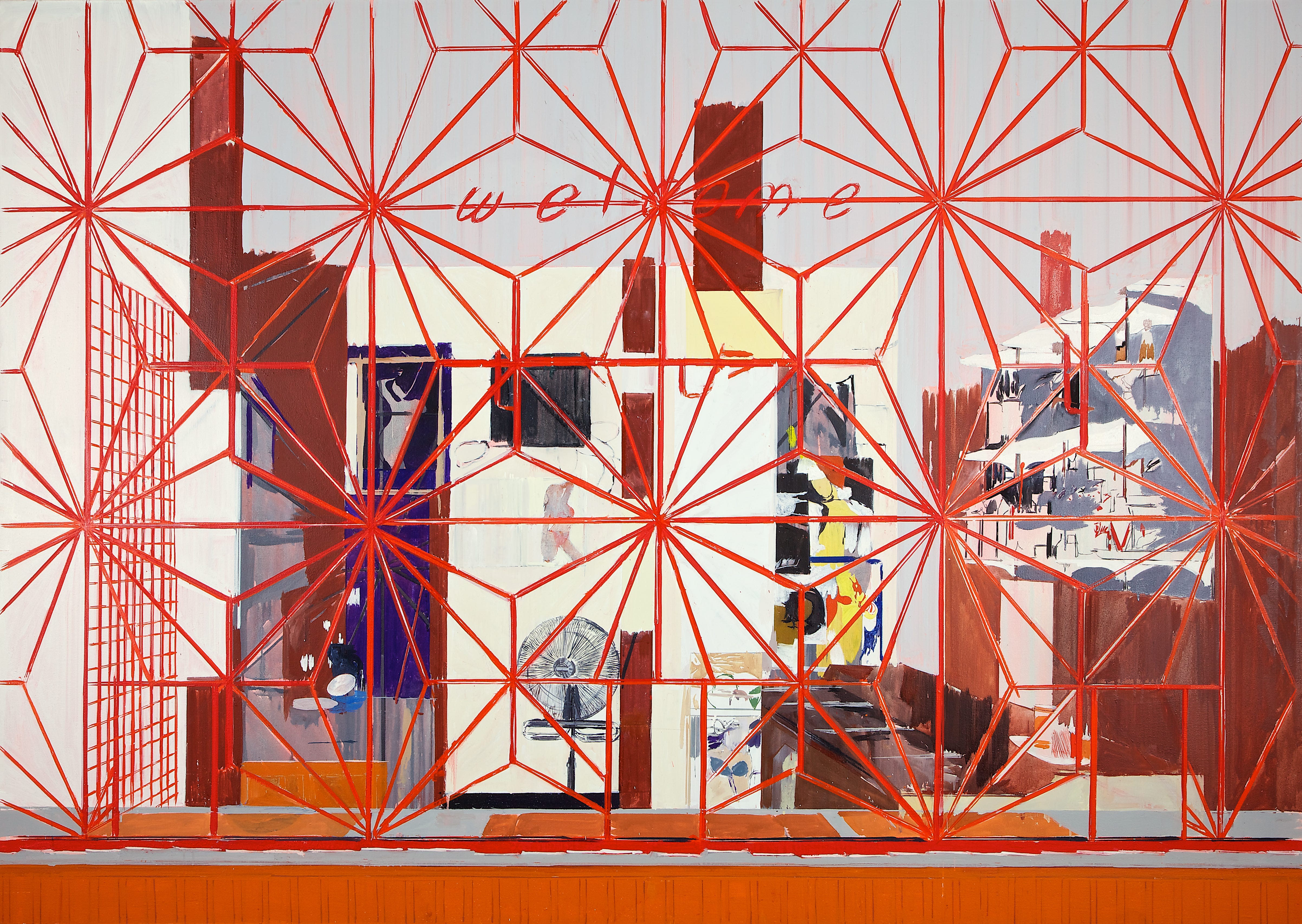
Amidst the green-blues of someplace between Jamaica and the UK, a bright red polygonal pattern leaps from the wall and disrupts a flow of transatlantic impressions.
At first, the red grille reads as a tessellating mosaic or the mathematical skeleton of a perspective study. Peering beyond the geometry reveals a less benign reality: it’s an uninvited, sub-divided view into privacy. The word “welcome” hovers just above eye level like a reluctant formality.
Hurvin Anderson’s Welcome: Carib (2005) was born from an exploration of the wrought-iron security grilles ubiquitous to Caribbean architecture. The obstruction subverts our viewership and turns a mundane observation of familiar domesticity into a voyeuristic invasion of the other. Suddenly, we’re trespassing a reality within reach but beyond access. Who is here/there? Am I in/out? Are we us/them?
Anderson’s Welcome series shares a spirit with my own exploration of the safety orange fence used to caution, alert, and deter. The inverse warning to Anderson’s ironic greeting, KEEP OFF emerged from a similar inquiry into exclusion/belonging but through an anthropocentric lens, and has come to embody deeper tensions of identity, technology, and culture.
Welcome: Carib’s imposing geometrics remind me that art need not untangle, but can instead call attention to the complex. Rather than ignoring or destroying, Anderson leverages these barriers to question what they claim to contain and protect.
Hurven Anderson is currently on view at Tate Britain until August.
Ruven is the musical avatar of London-based artist, songwriter, and producer Brian Parker, whose safety orange-tinted multiverse is inhabited by dimension-hopping voyagers and contemplative androids. His escape pod funk—a propellant blend of art-pop and experimental soul—is a vibrant, rhythmic salve for the pangs of future shock. Ruven’s latest NOT THE FUTURE EP lends an optimistic tone to anxious themes like social media addiction and virtual selfhood, with music videos that visit temporal loops and augmented realities.
On Brittany Adeline King’s Dokafleh
Clarissa Brooks
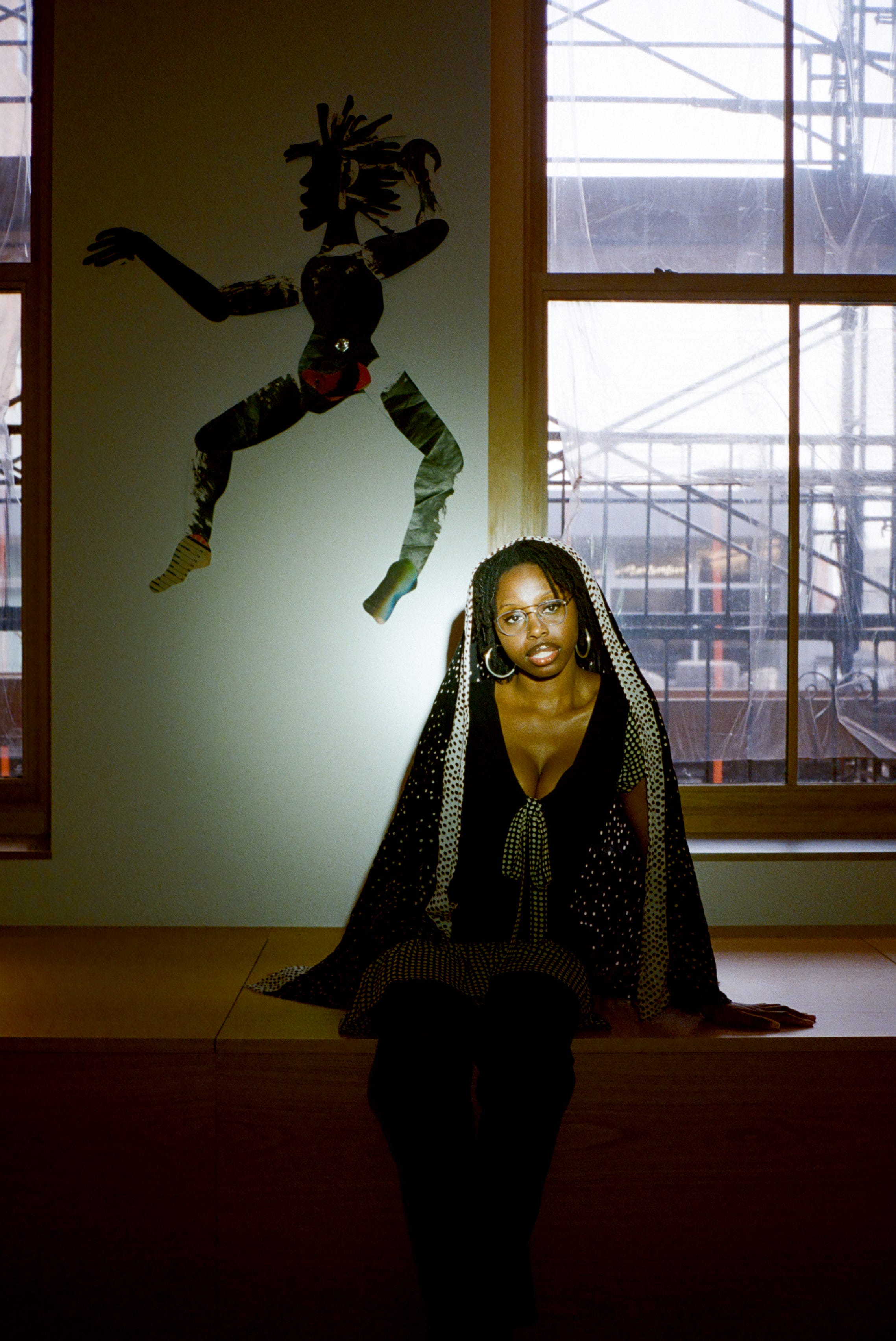
The Saturday heat of the first bright day of spring has arrived in Atlanta as I enter Brittany Adeline King’s, Dokafleh. An uneven but solid set of concrete stairs leads to the basement gallery that is home to the small exhibition. It is a stark contrast to the glow of outside.
Dancing on the wall of the left side of the gallery is a film with a soul soundtrack that underpins King’s time in Liberia at the Duala marketplace in Monrovia— a document of her return home in early 2026. The film is surrounded by paper dolls made from personal photos, magazine clippings, and paper, mounted—though seemingly stitched—onto the walls as tender fragments of recollection.
Named after the Liberian terminology for a heavily used garment, Dokafleh is a commemoration of time gained and restructured. Taken together, these works highlight King’s ability to be in an honest but nurturing relationship with the practice of memory keeping in her family, the parts of self that are transformed via migration to the USA. They are a shrine of belonging in reflection on time lost.
The film is shot from the perspective of the passenger side of a car. It rushes past colorful tent vendors under the highway underpass, driving past a market full of people deep in their own daily lives. The sound of the film sticks to me as I watch it, but I am unable to place the original song as a soul quartet croons “If I could only push back the hands of time” while the film loops again and again.
I am met with the loneliness that always sits next to me in nostalgia as King’s film watches me back. That no matter where I am, I am always looking to come home to myself, to my childhood neighborhood, or to a time that was beautiful before anyone gave it a name. This playing with recollection has been how I hear my internal voice and the pockets it lives in that help me find new ways of looking out.
It is a tedious kind of work that King asks of us as viewers and memory keepers; to not just make meaning of the journey home, but to question what the fragments of our own life might look like on a cellar wall. An inquiry like that makes me confront how brave it is to share your first place of belonging with others, through an artistic process, in hopes of being understood.
King’s film has a simple request: that we look at the traces of her return to her homeland with (young) eyes in search of the same beauty and compassion that we assign to or once found in our first places of self recognition.
Clarissa Brooks is a Black writer from Charlotte, NC. She is invested in the cultural production of Black people across the diaspora. Raised as a journalist and music critic, she comes from the world of community organizing, always tending towards abolition and the ripening of socialist futures. Brooks lives in the wake of cultural workers such as Toni Cade Bambara, Greg Tate, and Amiri Baraka. Where she seeks to make, undo, and sort through the Black art of these times. Brooks' work has appeared in Office Magazine, The Cut, and Rolling Stone. She is currently Assistant Editor at The Oxford American. Brooks is a 2018 Spelman College graduate, a child of stubborn Black women, and a descendant of queer elders made invisible.
Report From the Field
intimate looks at unexpected art worlds
Mario Lewis taps in from Port-of-Spain
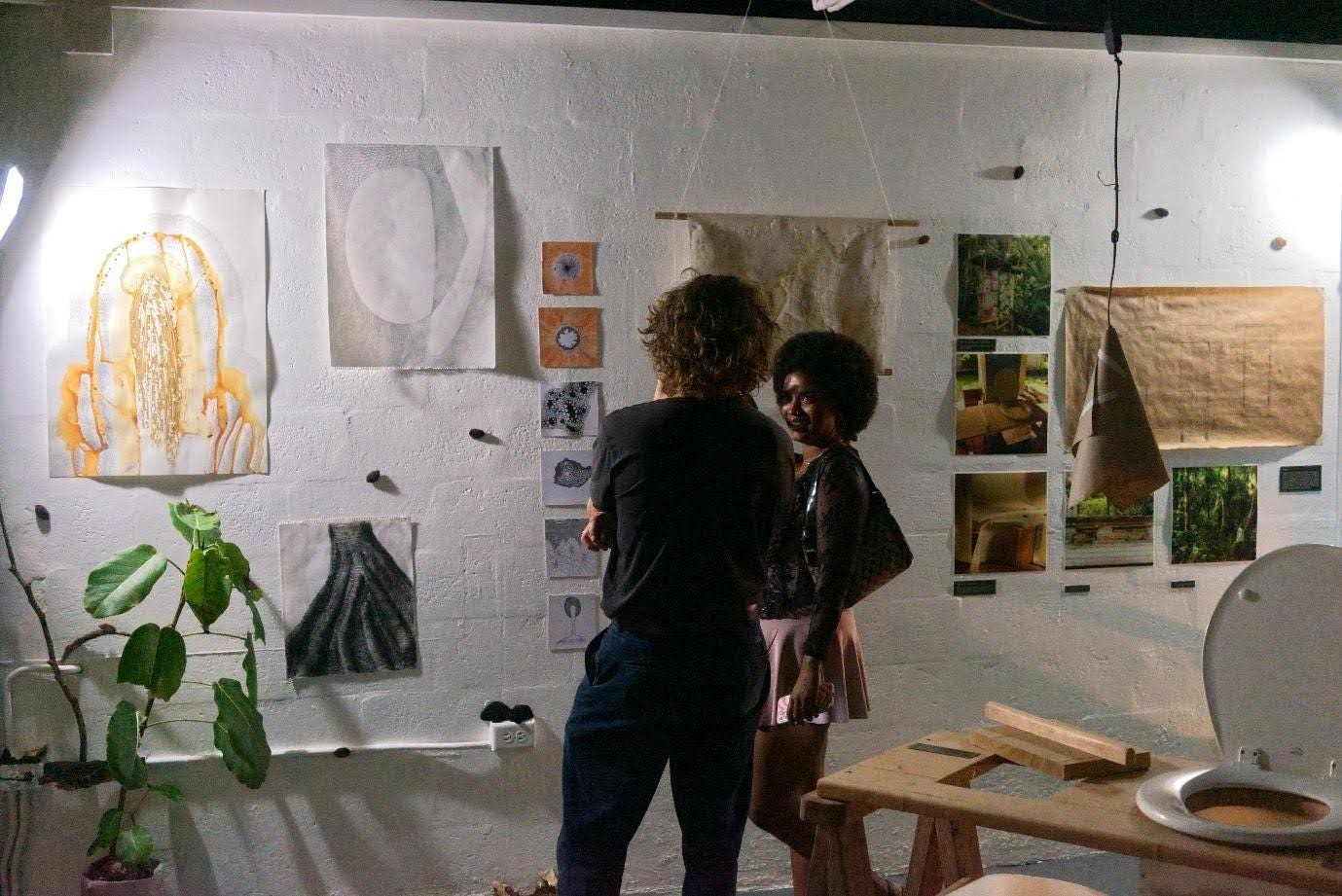
This spring, I designed and led Shifting How I Think (SHIT), a three-month international internship program launching the Futuresanitation-lab. Art and science-based, the lab explores the intersection of sanitation and agriculture, engaging local farmers and scientists. The findings were shared through a public exhibition, workshop, and film screening at the headquarters for D’ Market Movers Ltd, an online speciality grocery store.
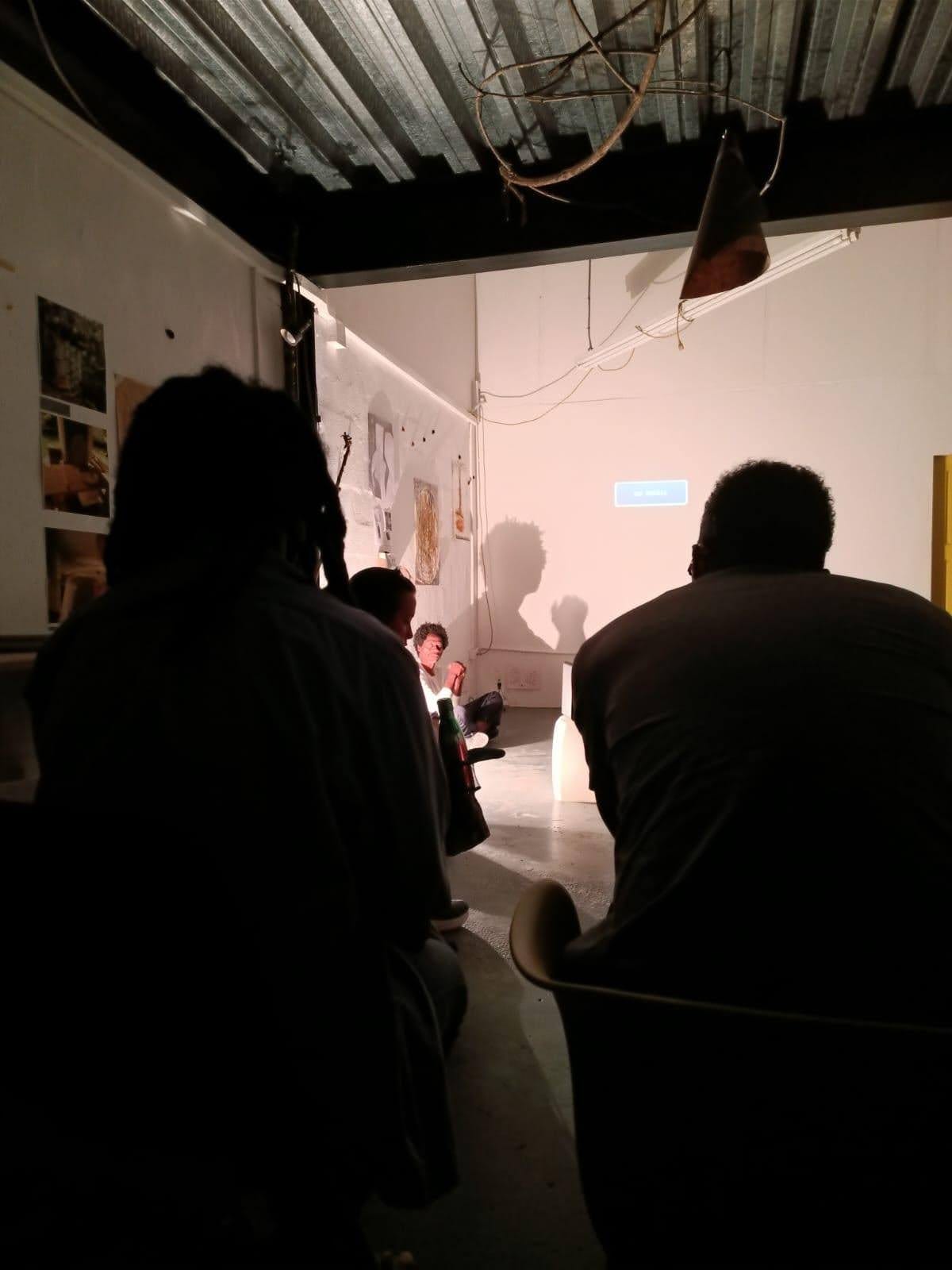
I hosted a discussion with the audience after the screening of Holy Shit on the closing night of the exhibition, Shifting How I Think. D’ Market Movers’ headquarters was the gathering spot again.
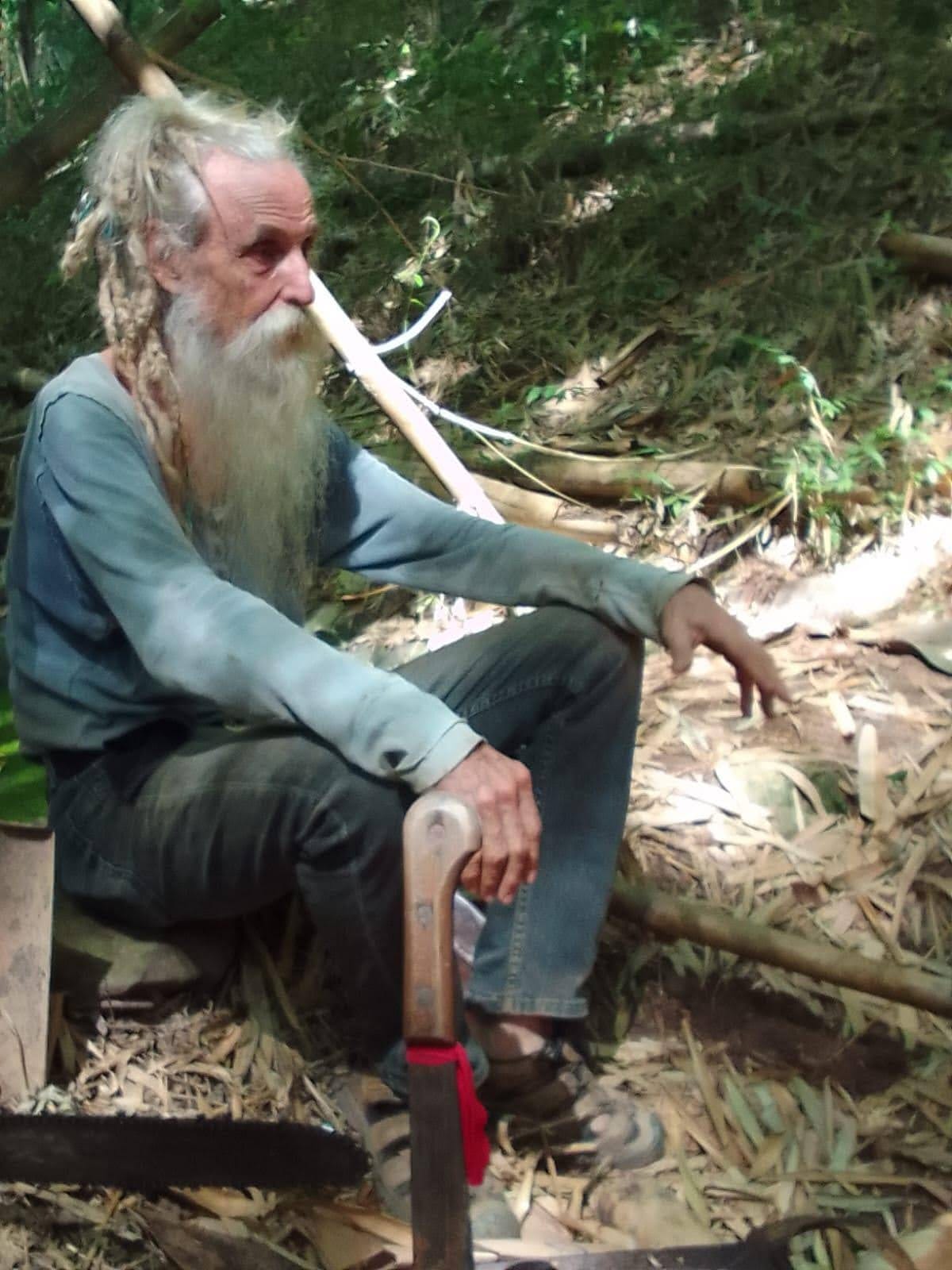
This spring, I also visited Johny Stollmyer, a permaculture expert, activist, and contemporary artist — in Northern Range Forest in St. Ann’s — who took a moment to share his knowledge on making biochar.
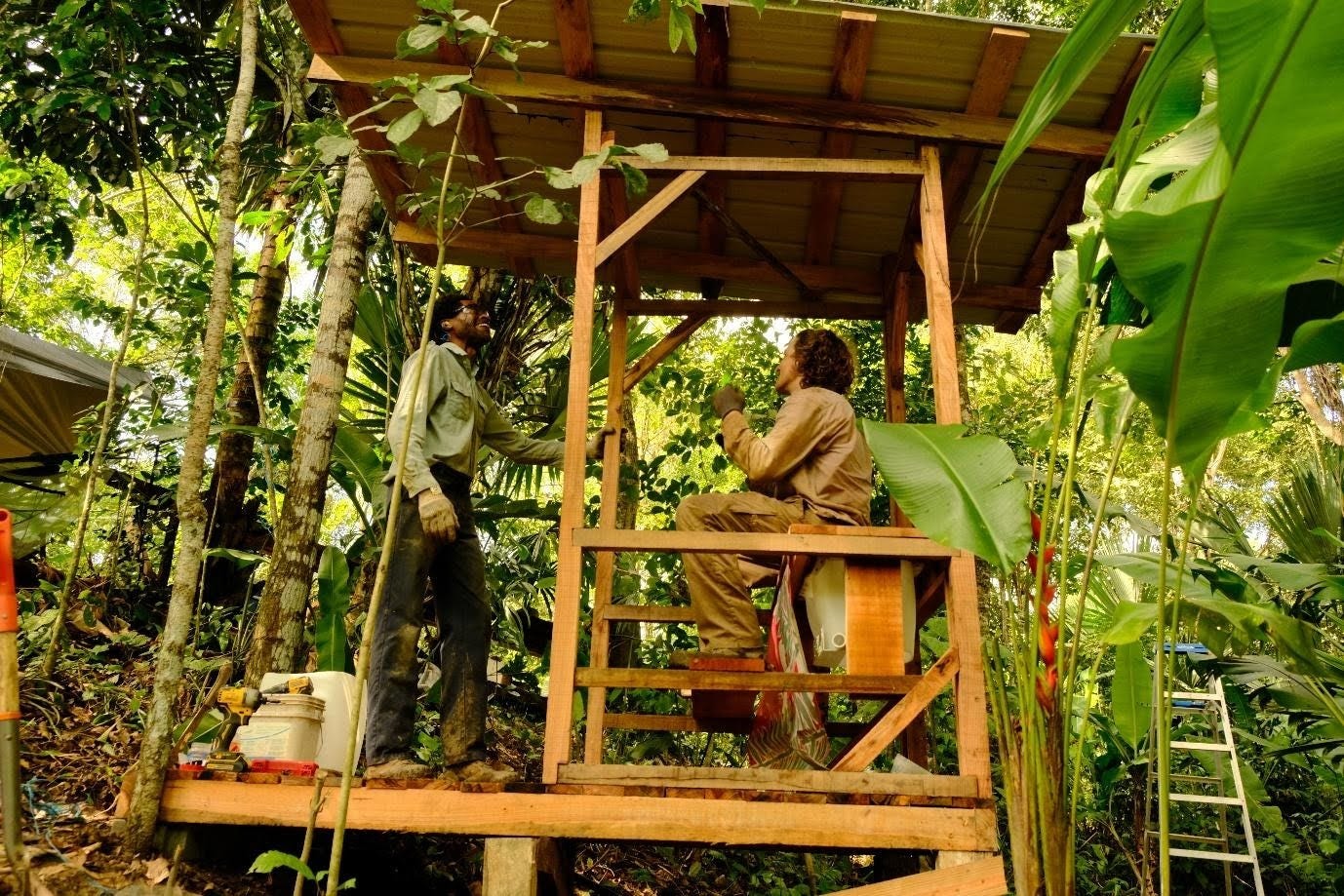
A prototype construction in progress of the dry-seperation toilet in the Central Range Forest in Mamoral. Franz Sigl was the lead designer and builder.
Mario Lewis is an artist who lives and works in Port-of-Spain, Trinidad and Tobago. He co-founded Inipsis (International Network of Innovative Partners for Sustainable Intelligent Systems) in 2013. It operates at the nexus of agroforestry, carbon sequestration, research, and product development. Through his Forest Notebooks practice, he aims to create imaginative, engaging platforms for environmental education and art intervention, culminating in the forthcoming Forest Notebooks International Residency Program.
Tough But Fair
let’s talk about things we don’t like
To Move Beyond Memory
Majula Swareh
I am at another art exhibition this week, and the cavernous room is filled with folks from everywhere surrounding one of the many incredible displays on view. I start, as always, reading the wall panel. This helps me frame the artist’s intention. It does not move me to experience an exhibition first before knowing its intended meaning, and I believe thinking with purported intention is a good way to practice knowing. I read the black and white text, and a wave of fatigue hits me: “this work addresses memory”. For the fifth time in two months, I am reading the same text in a different space. What are we expecting memory to carry?
The seeming ubiquity of the word in art writing these days is malaise inducing. Has the word “memory” become so sexy that we have completely lost the plot? I am hungry for an artist to speak the grammar of their longing. What holds them hostage? What are they nostalgic for? What is sincere to them? What are the specifics?
We have burdened memory. Instead of treating it as generous infrastructure, it has become the catchall for our discontents, our joys, our long and deep histories. Memory has become directly correlated with remembering, and so has become flattened as an abstraction.
The language of memory without a qualifier has become a prison for the artist, and I wonder what type of knowing it enables when the language of what we consider our nostalgia has become so limited. Can we do better? Can we reach for more distributed forms and name what kind of memory we actually mean? The cartographies of our truths deserve more precise coordinates.
We need to move beyond memory as recollection. To produce the kind of knowing that is attentive to conditions beyond category and is curious about interiority in terms of what we embody, what we inhabit, what lies just beyond our most fervent imaginations, and how it relates to the archives of our lives, always in relation and always in process. This is hard work, and we should not shy away from it.
omg it’s me!!!!!