

The Brief: Fall 2025
New writing from Jet Toomer, Bitter Kalli, and Kleaver Cruz

Ways of Seeing
a personal experience with an artwork
On Barbara Chase-Riboud’s Confessions of Myself (1972)
Jet Toomer
Barbara Chase-Riboud makes her work from a place of self-assuredness. Confessions of Myself, a bronze and wool sculpture, was first exhibited in 1972. This work and its motif will inform her practice for the next four decades. It is autumn and I’m at my desk. When I turn the brightness up on my screen, I do not know this yet.
When I gaze at the sculpture, I decide I am looking at the back of a garment. The bronze contours into a corseted waist meeting a bustle, sweeping against the ground. A highly constructed coat, embracing or trapping its absent wearer — an imposing presence either way. Or perhaps a jacket and skirt, the stele as the artist referred to it, becomes the absent figure draped in a camouflage of juxtaposition, hidden beneath the broom of woolen ropes. Textural interplay tricks the mind into combining the materials into one.
My first impulse is to find what I can read and decide what I may be looking at based on what the artist says about herself. Abstraction signals an obfuscated interior or narrative; there are technical maneuvers and figurative gestures the artist makes when working in three dimensions. Knowing the point of view of an artist has come to define how I decide if I want to believe them or not. Believe what? I’ll know it when I find it. This, of course, is just an impulse and not an edict. Still, it helps to assign a story, to aggregate the work, an attempt to understand what informs the maker by what and who surrounds them.
Chase-Riboud is known for her parallel art making — working across forms from visual to literary arts. She writes robustly, having penned many historical novels, poetry, and most recently an epistolary memoir, a collection of 300 letters written over 30 years to her mother. In her memoir, I Always Knew, she writes, “I invented a skirt of wool which when combined with the bronze assumed a surprising transference that metamorphosed the wool into the weight-carrying materials and the bronze into the ascending or floating material. The philosophical ramifications and structural bravado were perfect.”
If I were facing Confessions of Myself in a blue-chip gallery I may feel called to offer it a reverential gaze. Looming at 9 feet high it is much larger than a burial marker; this work is part sarcophagus, part monument. It seems as if it has suspended itself above the ground, hovering like an alien vessel. Solid, fixed, cool to the touch? Or malleable, soft and permeable?
When this work was being conceptualized and fabricated in Italy, the American born artist was chiefly a resident of Europe, with no plans on returning. Like the many Black American creatives with the means to leave behind mid-20th century American apartheid and living abroad — she could no longer place her imagination in the midst of the tensions between the races. In her letters back home, she writes of a life not bound to a color caste but one where a beautiful Black woman artist actually has a chance at a life of her choosing. She leapt at every opportunity. “I determined to resolve the contradictions inherent in the idea that there is a fundamental separation between art produced by mainstream (white) artists and art produced by artists labeled as “Black,” she continues in her memoir. This mission bound her to the greater pan-African cultural work happening in the 1970s, while unburdening her from the labor of social struggle in the U.S.
Confessions of Myself is in a succession of sculptures meant to honor Black American heroes who died famously after living infamously fighting to change the tragic conditions of their people. This elicited an impertinent response from the press in the States. In The New York Times, her monuments were described as “sculptures of considerable elegance,” and thus couldn’t be representative of “heroic suffering” inferred by their subject. Chase-Riboud’s response nearly 50 years later: “What I had done was simply to have integrated a vision of highly unique, original, world-class technique with a title taken from the international headlines in the context of the worldwide Black Movement, even if it were only symbolic.”
This political maneuver — this nod towards the justice movement of the moment rings hollow. The politicized life of the Martyr is part marketing for the creative innovations of the artist. In title only, her work is informed by the subject. Hundreds of works made by artists of the African Diaspora get assigned Black Liberatory status because of the perceived politics of the maker, but not the actions taken by the artist towards that cause. Why does this style of signalling seem to echo now? Often this misrepresentation goes unchecked, or worse, further exploited.
“The year 1972 was monumental for me.” Chase-Riboud declares, recalling the year the sculpture was exhibited. Her work is confident. By employing the same technical forms as her earlier series, Confessions works as a memorial to herself. She is inserting herself into the pantheon of these great Black fighters and is deserving because she says so.
Jet Toomer is a writer and community organizer. Her writing has been featured in Southern Cultures, The Massachusetts Review, Full Bleed, and Victory Journal, among other publications. She pens Tiny Violences, a notable column at the intersections of culture, belonging, and queer womanism, also published via Substack.
Report From The Field
intimate looks at unexpected art worlds
Bitter Kalli taps in from Philly
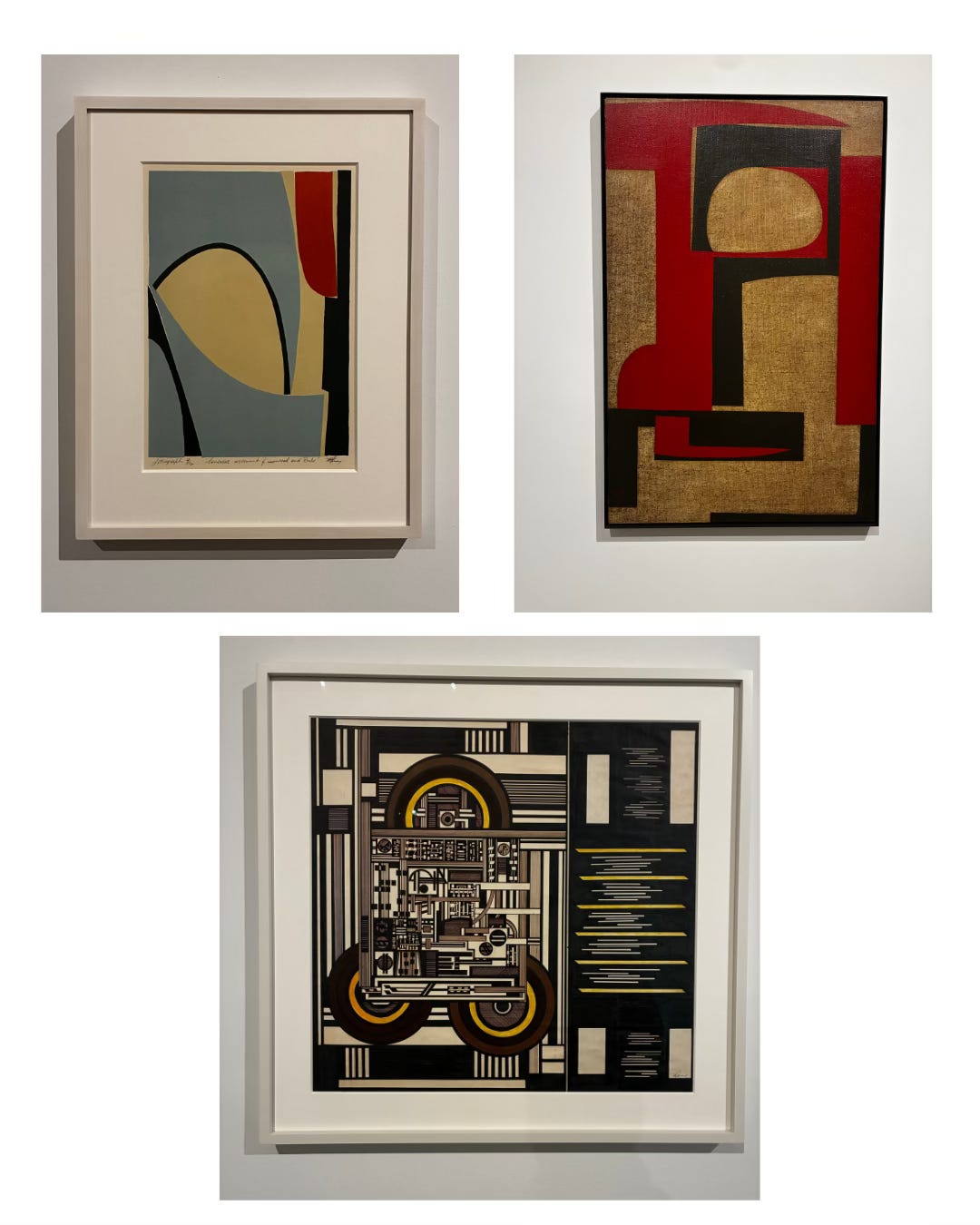
Images from Mavis Pusey: Mobile Images, at the Institute for Contemporary Art. Pusey was a Jamaican-born artist and fashion designer whose abstract paintings and prints explored the geometries of music, protest, urban development, embodiment, and the living world. (From left to right: Sensuous Movement of Seaweed and Rocks, n.d.; Solitude (1963); Untitled, n.d.)
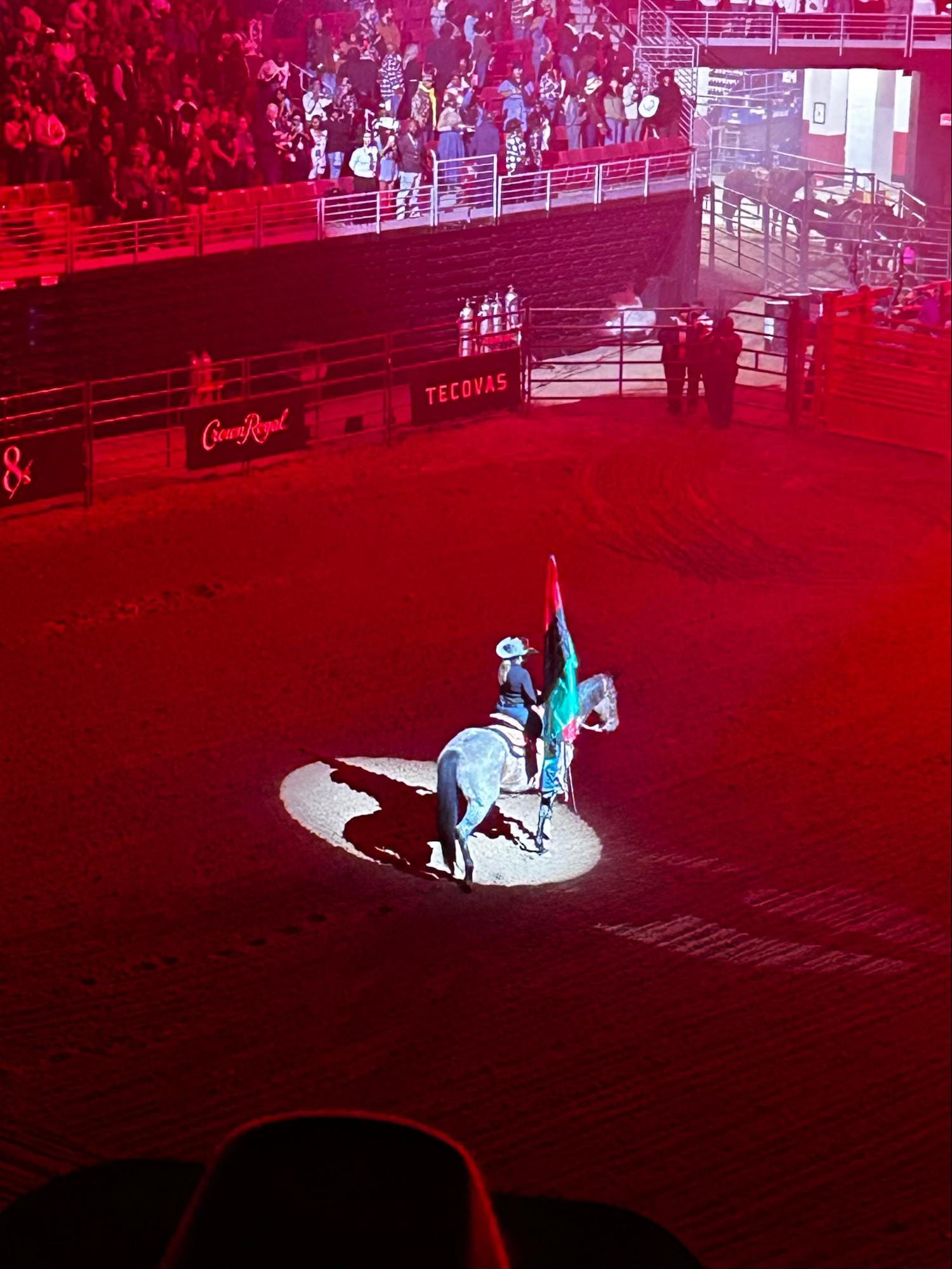
The 8 Seconds Rodeo is a Black touring rodeo that came to Philly this fall. Apart from the barrel racing, my favorite event was mutton bustin’, where small children attempted to stay on the backs of sheep who were running wild around the ring.
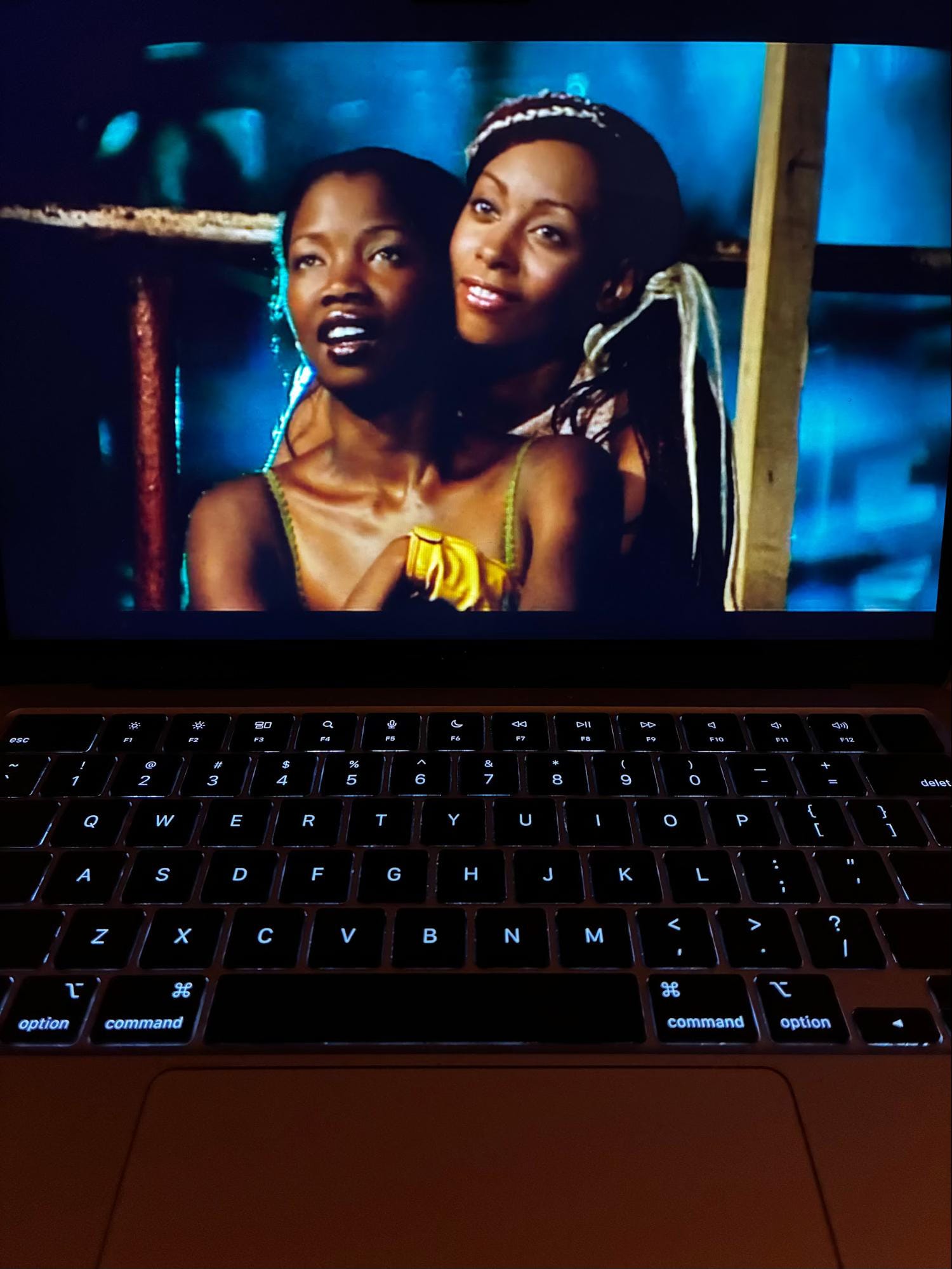
On Halloween, my partner and I watched The Bloodettes, a 2005 film by Cameroonian director Jean-Pierre Bekolo. It was grisly, touching, and surprisingly funny. Highly recommend.
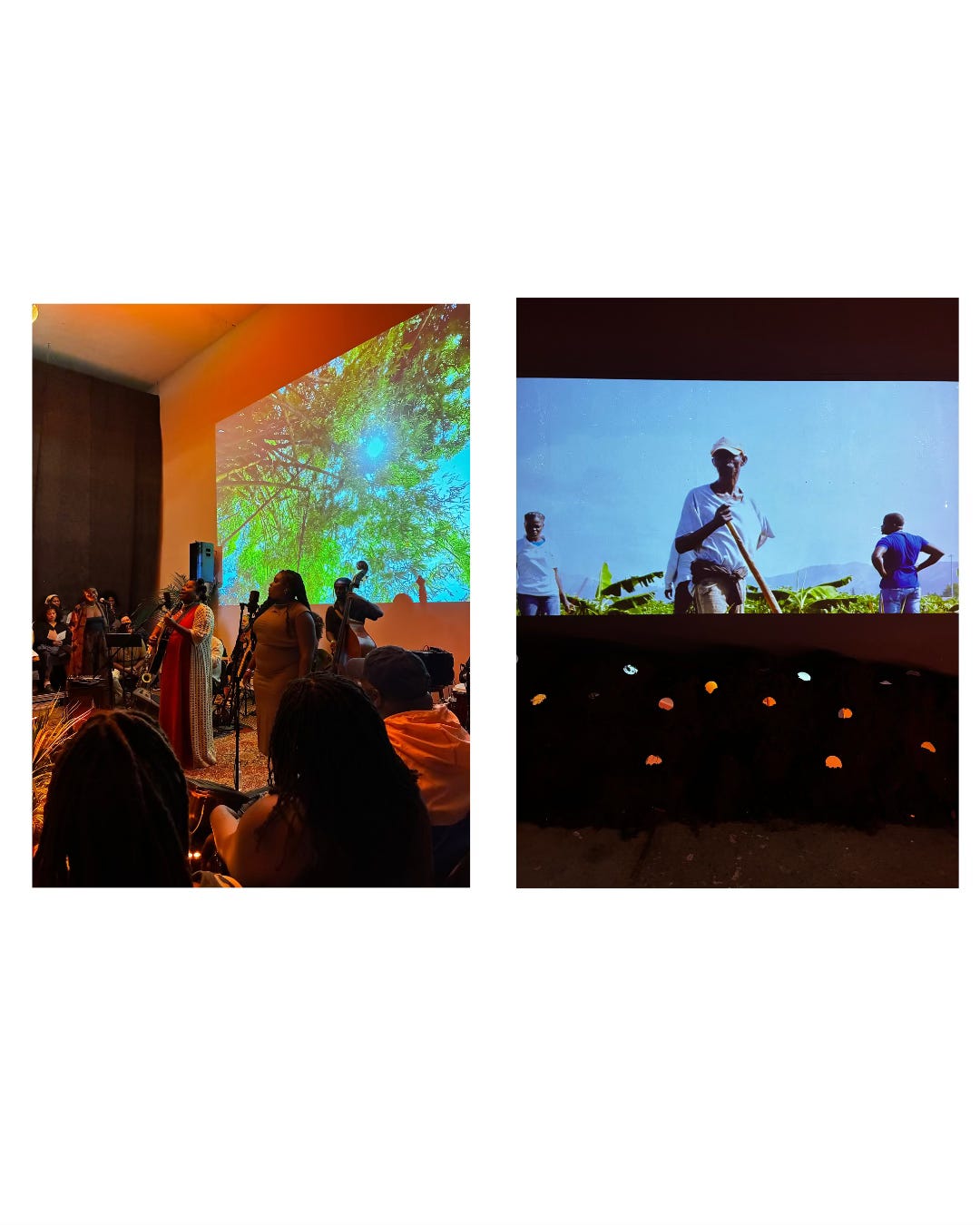
Images from MIWA, a multimedia exhibit and performance at Icebox Project Space by sisters Talie and Lunise Cerin. A thoughtful and tender look into Haitian womens’ experiences of intergenerational care and memory-keeping in Haiti and the U.S.
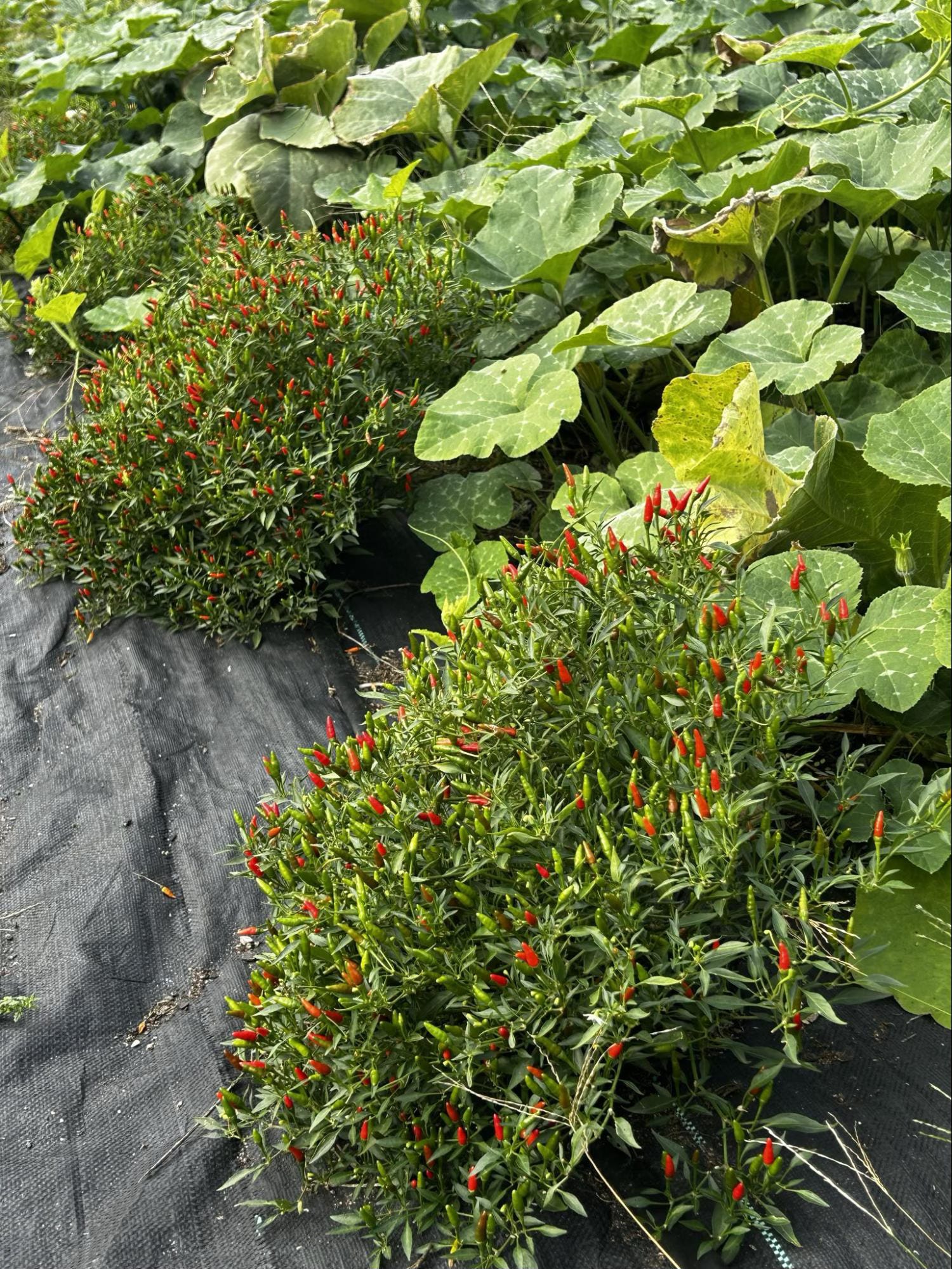
Jamaican pumpkins and Filipino siling labuyo peppers I have been growing at my plant nursery site this year. Growing and saving seeds from these ancestral crops has led to many beautiful collaborations with other artists, seedkeepers, and farmers in Philly.
Bitter Kalli is a writer and land worker originally from Brooklyn, NY. Their debut essay collection, Mounted: On Horses, Blackness, and Liberation, is out now from Amistad Books.
Tough But Fair
let’s talk about things we don’t like
Not Yet
Kleaver Cruz
Is it me? Am I not your cup of tea?
— Infinite Coles
Here’s the thing: we have always been here. We, the people at the intersection of Black and every possibility of being Black across genders and sexualities, have been here for the entirety of the existence of our wretched species. Today we exist in a moment, astrologically and spiritually speaking, that is making clear what has been obscured. Or better said, current events continue to reveal the truths about the lies we have been told for centuries as a means to control and manipulate the masses for the gains of the small group holding concentrated power. The blessing of TLGBQIA+ people in the world is that we tend to hold a mirror up to the societies we are a part of as we disrupt the rules set to control everyone — all of us — within them. Control can create a false sense of safety and stability. Control is about power, be it for personal gain or to sustain violently oppressive systems. A tale as old as time: when power feels its grip slipping, it strangles the most exposed necks. For the last two decades I have been in the study and practice of radical Black traditions that make connections between Black experiences around the world and across history. I am clear that no matter how loud lies may be yelled, even the quietest truths will come to light, eventually. And when they do, not only will they shake the table, they will provide opportunities to make seats at entirely new ones.
In her essay “On the Issues of Roles” for the groundbreaking 1970 anthology The Black Woman, which she edited, Toni Cade Bambara wrote, “The revolution aint out there, not yet.” What would it look like for those people, self-haters in power, to reckon with themselves to make sense of who they are authentically and not who they were taught to be? Not the self they fashioned to perform within the confines of systems that limit them. Not the version best fit to blend in and be indistinguishable. Who are those people then? Who are we all then? What would our place be in the coming worlds that return to the practices of honoring and celebrating lived experiences that exist beyond binaries and contrived boundaries? Toni Cade was inviting us to understand that peace is the exception and not the rule. On this journey towards worlds where violence is not the rule, who are we going to be? Who do we need to be? The obsession with the lives of queer folks is the delusion that people can be better judges of others than themselves. It’s the delusion that if a person suppresses who they are long enough and tells themselves the same lies long enough, the myths fashioned through control will be accepted as truth. Because pain is a thing that too many of us convince ourselves is ok to live with. “It’s just life,” we tell ourselves. So, we learn to function with thorns in our sides and worse, gain a fear of what a thornless life could be. As the old saying goes, misery loves company.
Well, I don’t want to be miserable, I want to be free(r).